
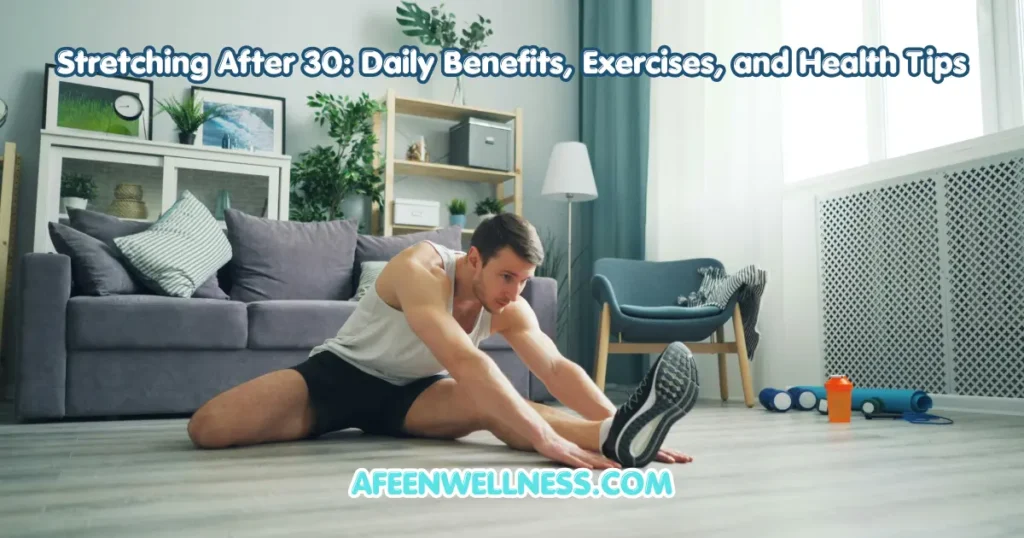
Turning 30 is an important milestone, and it can also be a good time to pay more attention to your physical health. Many adults begin noticing muscle stiffness, tight hips, neck discomfort, and reduced flexibility, particularly if they spend long hours sitting at a desk or using electronic devices.
One simple habit that can support better movement is stretching.
Stretching is not just for athletes, gym enthusiasts, or yoga practitioners. It is a practical form of physical activity that can help improve flexibility, increase joint range of motion, and make everyday movements more comfortable.
Whether you want to reduce everyday stiffness, improve mobility, or develop a healthier morning routine, regular stretching exercises can be a useful addition to your lifestyle.
In this guide, you will learn about the benefits of stretching after 30, how to start stretching exercises at home, the different types of stretching, and simple exercises for your neck, shoulders, hips, and lower back.
What Is Stretching? Understanding the Stretching Definition
Stretching is a physical activity that involves lengthening or extending muscles and surrounding soft tissues to improve flexibility and the range of motion of your joints.
In simple words, stretching means gently moving your body into a position that creates tension in a particular muscle or muscle group.
For example, reaching your arms above your head stretches your shoulders and upper body, while gently extending your legs can stretch your hamstrings.
What do you mean by stretching?
Stretching means moving or positioning your body to gently lengthen specific muscles. It can be performed before exercise as part of a dynamic warm-up or after exercise to develop flexibility.
Regular stretching may help you:
- Move your joints through a greater range of motion.
- Improve flexibility.
- Reduce feelings of muscle tightness.
- Make everyday movements easier.
- Prepare your body for physical activity.
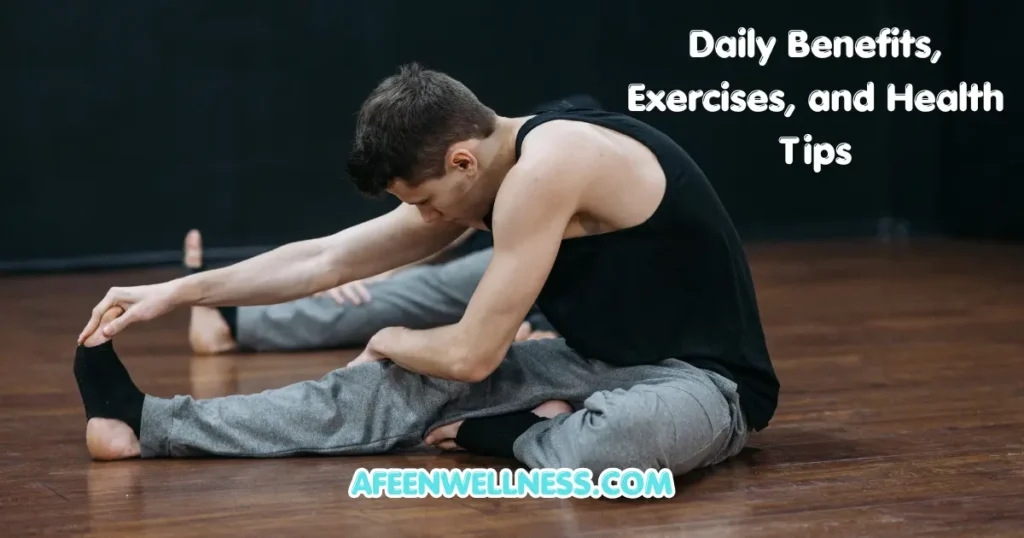
Why Does Flexibility Become More Important After 30?
Flexibility can change throughout adulthood. However, turning 30 does not automatically mean your muscles become stiff or that your body starts losing flexibility rapidly.
Your daily habits, physical activity levels, occupation, exercise routine, sleep, and general health all influence how comfortably you move.
Here are some common reasons adults may experience stiffness and reduced flexibility.
1. Reduced Physical Activity
Many adults become less physically active as work and family responsibilities increase.
Spending extended periods sitting can make the hips, hamstrings, shoulders, and back feel tight. Regular movement and stretching can help maintain comfortable mobility.
2. Changes in Muscle and Connective Tissues
Muscles, tendons, and other connective tissues change as the body ages. These changes can influence flexibility and physical performance.
However, flexibility is not permanently lost after 30. Appropriate exercise and regular movement can help maintain or improve your range of motion.
3. Sitting for Long Periods
Working at a computer, driving, and using mobile devices for extended periods can contribute to discomfort in the neck, shoulders, and back.
Taking movement breaks and including stretching exercises in your daily routine can help you avoid remaining in one position for too long.
4. Limited Joint Movement
When you rarely move your joints through their comfortable range of motion, certain movements may begin to feel restricted.
Gentle mobility exercises and stretching can help you practice these movements regularly.
5. Stress and Muscle Tension
Stress can contribute to muscle tension, particularly around the neck, shoulders, and upper back.
Slow stretching combined with relaxed breathing may help you feel more comfortable and relaxed.
10 Benefits of Stretching Every Day
What happens if you stretch every day? Regular stretching can provide several benefits, especially when combined with walking, strength training, and other forms of physical activity.
Here are 10 potential benefits of stretching.
1. Improves Flexibility
One of the main benefits of stretching is improved flexibility.
Regular stretching helps increase the range of motion available at your joints. This can make everyday activities, such as bending, reaching, walking, and getting up from a chair, easier.
2. Supports Better Mobility
Mobility refers to your ability to move your joints comfortably and with control.
Stretching exercises can help maintain the movement needed for everyday activities, particularly when you spend much of your day sitting.
3. Helps Reduce Muscle Tightness
Muscle tightness can make normal movements uncomfortable.
Gentle stretching may help reduce feelings of tightness and improve your ability to move comfortably.
4. Supports Lower Back Mobility
Long periods of sitting and limited physical activity can contribute to lower back discomfort.
Appropriate lower back stretches may help improve flexibility around the hips, hamstrings, and lower back.
However, stretching is not a treatment for every cause of back pain.
5. Encourages Relaxation
Stretching slowly while breathing normally can create a relaxing break in your day.
Some people find that gentle stretching helps them feel calmer, particularly after a long working day.
6. Helps Prepare Your Body for Exercise
Dynamic stretching involves controlled movements that take your muscles and joints through their available range of motion.
It can be useful as part of a warm-up before activities such as walking, running, and sports.
7. Supports Everyday Physical Activities
Reaching for objects, climbing stairs, bending down, and turning your body all require comfortable movement.
Maintaining flexibility can help you perform these everyday activities more easily.
8. Complements Strength Training
Stretching and strength training have different purposes.
Stretching focuses on flexibility and range of motion, while resistance training helps build muscle strength.
Combining both can create a more balanced fitness routine.
9. Helps Maintain Movement as You Age
Maintaining flexibility becomes increasingly important as you get older.
A regular stretching routine can help you continue practicing the movements required for daily activities.
10. Provides an Easy Way to Stay Active
Stretching does not require an expensive gym membership or complicated equipment.
Many stretching exercises can be performed at home using a comfortable space and a few minutes of your time.
Remember that stretching is not a replacement for aerobic exercise or strength training. It works best as one part of an overall fitness routine.
How to Start a Daily Stretching Routine After 30
You do not need to perform complicated exercises or spend hours stretching.
Start with a simple routine that fits your lifestyle.
1. Start With 5–10 Minutes
If you are new to stretching, begin with a short routine.
Choose a few exercises that target the areas where you experience stiffness. Gradually increase your routine as your flexibility and confidence improve.
2. Warm Up Before Stretching
Avoid immediately performing deep stretches when your muscles are cold.
Start with a few minutes of easy walking, gentle marching, or comfortable arm movements.
3. Focus on Common Tight Areas
Pay attention to areas that may become uncomfortable after prolonged sitting:
- Neck
- Shoulders
- Chest
- Hip flexors
- Hamstrings
- Lower back
- Calves
4. Hold Stretches Comfortably
For most basic static stretches, begin with a comfortable hold of around 10–30 seconds.
Avoid bouncing or forcing your body into a position.
5. Breathe Normally
Do not hold your breath while stretching.
Take slow, comfortable breaths and allow your muscles to relax.
6. Avoid Stretching Through Pain
A gentle pulling sensation is generally acceptable.
Sharp pain, joint pain, numbness, or tingling are warning signs. Stop the exercise if these occur.
7. Make Stretching a Daily Habit
Connect stretching with an activity you already perform.
For example, stretch after your morning walk, during a break from work, or as part of your evening routine.
Consistency is more important than attempting difficult exercises.
Best Stretching Exercises at Home
You can perform several simple stretching exercises at home without specialized equipment.
Here are some beginner-friendly options.
1. Neck Stretch
This exercise targets the muscles along the sides of your neck.
How to do it:
- Sit comfortably with your back straight.
- Slowly tilt your head toward your right shoulder.
- Stop when you feel a gentle stretch.
- Hold for 10–20 seconds.
- Repeat on the opposite side.
Avoid pulling your head forcefully.
2. Shoulder Stretch
Shoulder stretching can help improve comfortable movement around the upper body.
How to do it:
- Bring your right arm across your chest.
- Use your left hand to gently support the right arm.
- Hold the position for 10–30 seconds.
- Repeat with the opposite arm.
This is a useful shoulder stretch for people who spend long periods working at a desk.
3. Cat-Cow Stretch
The cat-cow movement is a gentle exercise for spinal mobility.
How to do it:
- Start on your hands and knees.
- Place your hands under your shoulders and knees under your hips.
- Slowly round your back toward the ceiling.
- Gently move into a comfortable arch while lifting your chest.
- Repeat slowly for 5–10 repetitions.
Avoid forcing your back into either position.
4. Standing Hamstring Stretch
This exercise targets the muscles at the back of your thighs.
How to do it:
- Stand comfortably with one foot slightly in front.
- Keep the front leg relatively straight and bend the opposite knee.
- Gently hinge forward at your hips.
- Stop when you feel a stretch behind your front thigh.
- Hold for 10–30 seconds and switch sides.
5. Hip Flexor Stretch
The hip flexors can feel tight after prolonged sitting.
How to do it:
- Start in a comfortable half-kneeling position.
- Place one foot forward.
- Gently shift your hips forward while keeping your upper body upright.
- Feel a stretch at the front of the hip on the kneeling side.
- Hold for 10–30 seconds and change sides.
6. Chest Stretch
This exercise targets the chest muscles.
How to do it:
- Stand beside a doorway.
- Place your forearm against the doorframe.
- Slowly turn your body away from your arm.
- Stop when you feel a gentle stretch across your chest.
- Hold for 10–30 seconds and switch sides.
Lower Back Stretches: Gentle Exercises for Back Mobility
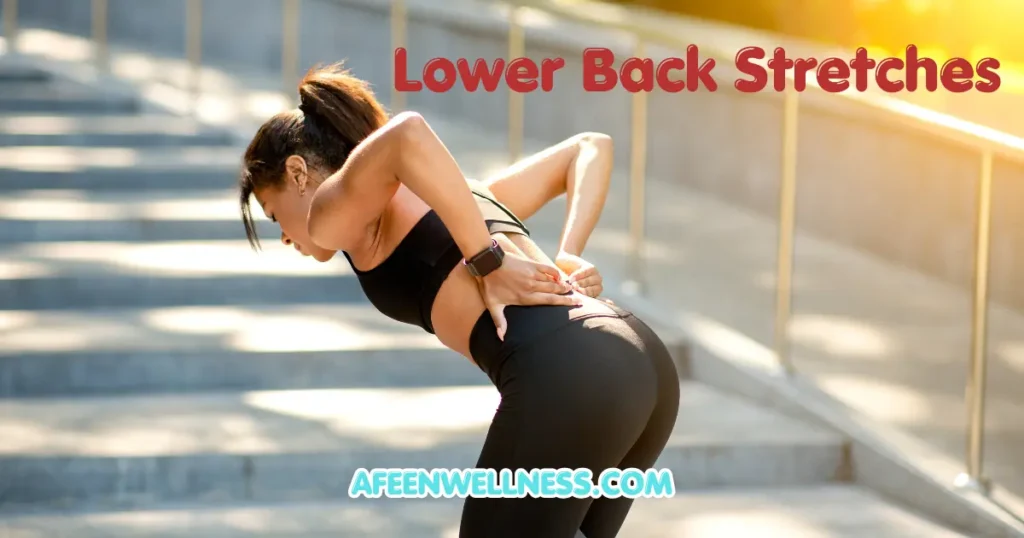
Lower back discomfort is common among adults, especially those who spend long periods sitting or performing repetitive activities.
Some gentle stretching exercises may help improve mobility and reduce discomfort for certain people.
However, the right exercise depends on the cause of your back pain.
1. Knee-to-Chest Stretch
- Lie on your back with your knees bent.
- Gently bring one knee toward your chest.
- Hold it comfortably for approximately five seconds.
- Return to the starting position.
- Repeat with the other leg.
2. Lower Trunk Rotation
- Lie on your back with your knees bent and feet flat.
- Keep your shoulders on the floor.
- Slowly move both knees toward one side.
- Hold for 5–10 seconds if comfortable.
- Return to the middle and repeat on the opposite side.
3. Child’s Pose
- Kneel on the floor.
- Slowly move your hips toward your heels.
- Extend your arms forward if comfortable.
- Relax your upper body without forcing the position.
- Hold for a comfortable period.
4. Hamstring Stretch
- Lie on your back.
- Lift one leg while supporting the back of your thigh.
- Slowly straighten the knee until you feel a gentle stretch.
- Hold briefly and switch legs.
Important: Stop any exercise that increases your back pain or causes new symptoms. If you have persistent back pain, a previous spinal injury, or pain that travels down your leg, consult a healthcare professional before starting a new stretching program.
Resistance Band Exercises for Lower Back Pain
Resistance bands are commonly used in physical therapy and strength-training programs.
They can help strengthen muscles that support the spine and hips. However, resistance band exercises are not necessarily stretches, and they should not be considered a guaranteed treatment for lower back pain.
Some exercises that a physical therapist may recommend include:
- Resistance band glute bridges.
- Standing resistance band rows.
- Gentle band-assisted hamstring stretches.
- Resistance band hip exercises.
The right exercises depend on your symptoms, physical condition, and movement limitations.
If you are experiencing lower back pain, ask a physiotherapist to demonstrate the correct technique before using resistance bands.
What Are the Five Types of Stretching?
There are several stretching techniques. Five commonly discussed types include:
1. Static Stretching
Static stretching involves holding a muscle in a comfortable stretched position for a specific period.
Example: Holding a hamstring stretch for 20 seconds.
2. Dynamic Stretching
Dynamic stretching uses controlled movements to take muscles and joints through their range of motion.
Example: Arm circles, leg swings, and controlled walking lunges.
3. Ballistic Stretching
Ballistic stretching uses bouncing or rapid movements to push a muscle toward its end range.
It requires good control and is not generally recommended for beginners because uncontrolled bouncing can increase injury risk.
4. Active Stretching
Active stretching involves using your own muscles to move into or maintain a stretching position without external assistance.
Example: Lifting one leg and holding it in position using your own muscles.
5. Proprioceptive Neuromuscular Facilitation (PNF)
PNF stretching combines muscle contraction and relaxation with stretching.
It is commonly performed with assistance from a trained professional or partner.
The five categories are not a single universal classification: passive and isometric stretching are also recognized techniques.
What Is Stretching in the Morning?
Morning stretching is a simple routine performed after waking up.
After several hours of sleep, some people experience temporary stiffness in their backs, hips, shoulders, and legs.
Gentle morning stretching can help you move comfortably and prepare for your daily activities.
A simple morning routine may include:
- Gentle neck movements.
- Shoulder rolls.
- Arm reaches.
- Cat-cow movements.
- Gentle hamstring stretches.
- Hip mobility exercises.
Start slowly and avoid deep stretches immediately after waking up.
Does Stretching Exercises Increase Height?
Many people search for stretching exercises for height because they want to become taller.
However, stretching does not increase the actual height of adults after their growth plates have closed.
Stretching may improve flexibility and posture, which can help you stand straighter and appear taller.
Exercises such as gentle chest stretches, shoulder mobility movements, and spinal mobility exercises can support comfortable posture.
Be cautious of online programs promising permanent height increases through stretching.
What Is Hyperbolic Stretching?
Hyperbolic stretching is a term used to describe a marketed flexibility program that promotes improved flexibility through specific stretching techniques.
It is important to understand that hyperbolic stretching is not a separate, medically established category of stretching.
Although regular stretching can improve flexibility, there is insufficient high-quality clinical evidence to conclude that a particular hyperbolic stretching program provides extraordinary results or works faster than other appropriate flexibility exercises.
If you decide to try such a program, avoid movements that cause pain and do not rely on marketing promises instead of evidence-based exercise guidance.
What Does Stretching Every Day Do to Your Body?
Stretching regularly can help improve flexibility and joint range of motion over time.
You may notice that certain movements become easier, your muscles feel less tight, and everyday activities require less effort.
However, results vary depending on your starting flexibility, exercise technique, consistency, and overall health.
Daily stretching does not automatically prevent injuries, eliminate chronic pain, or replace other forms of exercise.
How to Stay Consistent With Stretching After 30
The biggest challenge is often not learning stretching exercises but making them part of your lifestyle.
Try these simple strategies:
- Begin with a short routine.
- Stretch at the same time each day.
- Take movement breaks during work.
- Combine stretching with walking.
- Include strength training in your weekly routine.
- Choose exercises that feel comfortable.
- Increase your stretching time gradually.
Remember that your goal is not to achieve extreme flexibility. It is to maintain comfortable movement and support your long-term physical health.
The Bottom Line
Stretching after 30 is a practical way to support flexibility, mobility, and comfortable everyday movement.
You do not need complicated equipment or an expensive gym membership to begin. A few simple stretching exercises at home can help you develop a consistent flexibility routine.
Focus on gentle movements, proper breathing, and gradual progress. Combine stretching with regular walking, strength training, and other healthy habits.
Your body does not stop benefiting from movement after 30. Starting a simple stretching routine today can help you stay active and mobile as you grow older.
Frequently Asked Questions About Stretching
What do you mean by stretching?
Stretching is a physical activity that gently lengthens muscles and surrounding tissues to improve flexibility and joint range of motion.
What happens if you stretch every day?
Regular stretching can improve flexibility and range of motion and may reduce feelings of muscle tightness. However, stretching should be performed gently and should not cause pain.
What are the five types of stretching?
Five commonly discussed types are static, dynamic, ballistic, active, and proprioceptive neuromuscular facilitation (PNF) stretching.
What is stretching in the morning?
Morning stretching involves gentle movements performed after waking up to improve comfortable mobility and prepare your body for daily activities.
What are the benefits of stretching?
Stretching can improve flexibility, joint range of motion, and movement comfort. It can also be a useful part of a balanced fitness routine.
Can stretching help lower back pain?
Some gentle stretching exercises may help people with certain types of lower back discomfort. However, the best exercises depend on the cause of the pain. Stop if symptoms worsen and seek professional advice when needed.
Can I do stretching exercises at home?
Yes. Many exercises, including shoulder stretches, hamstring stretches, cat-cow movements, and gentle hip stretches, can be performed at home without equipment.
Does stretching increase height?
No. Stretching cannot lengthen adult bones after growth plates have closed. It may improve posture, helping you stand straighter.
Is hyperbolic stretching effective?
Stretching itself can improve flexibility, but there is not enough high-quality clinical evidence to establish that the marketed hyperbolic stretching program is superior to ordinary stretching routines.
What is the best time to stretch?
Stretching can be performed at different times of the day. It is generally best to stretch when your muscles are warm. A few minutes of light movement can prepare your body before static stretching.
How long should I hold a stretch?
For many basic static stretches, holding a comfortable position for 10–30 seconds is a reasonable starting point. Avoid bouncing or forcing the movement.
Can stretching replace strength training?
No. Stretching improves flexibility and range of motion, while strength training develops muscle strength. Both can contribute to a balanced exercise routing.
Medical Disclaimer
This article is intended for educational and general informational purposes only. It does not provide medical advice, diagnosis, or treatment. Stretching exercises may not be suitable for everyone, particularly people with existing injuries, chronic pain, joint conditions, or other medical concerns.
Consult a qualified healthcare professional or physical therapist before beginning a new exercise routine if you have a medical condition or ongoing pain. Stop exercising if you experience sharp pain, numbness, tingling, or worsening symptoms.
Never use stretching as a substitute for professional medical evaluation or treatment.