
The realization by the Greeks and the Romans that regular physical activity is good and the modern-day medicine that has proved that exercise can keep you out of the health care center is not a discovery. Nonetheless, sedentary and inactive lifestyles have hitherto become health risks to the society.
This is a time that it is convenient to travel at the cost of travelling. The culture of sitting is encouraged in our society, as we have an app to share a ride with or even pick up and deliver. It is now time in front of screens that are needed in offices. It also prefers to be lazy even in our free time, whether it is watching shows on the stream, playing video games, using social media, or other activities.This increase in sedentary living has made scholars inquire about the health consequences of sitting down.
“Sitting disease” is a new term that has been coined to refer to the number of health problems that can be associated with the inactivity. But just what happens to our bodies when we sit most of our daytime?
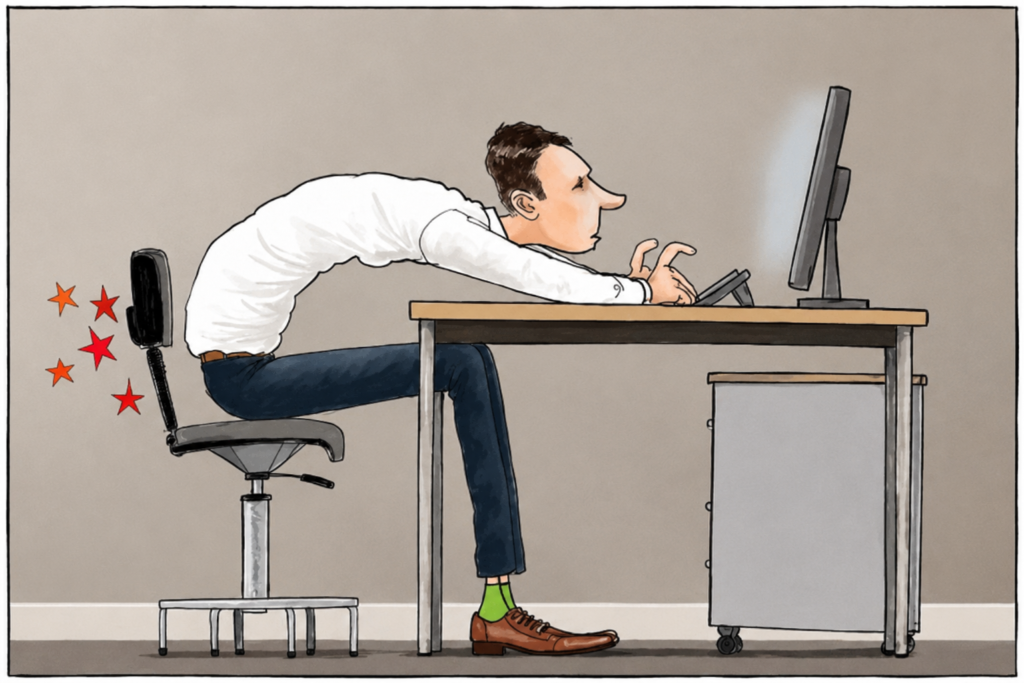
The Arguments of Excessive Sitting
The sitting theory is simple in this case. Our body is not made to stay still in one position, and wasting much time sitting and not moving may lead to a very large variety of unhealthy effects. This is despite the fact that you engage in frequent exercise.
According to Edward Coyle, PhD, professor and the director of the Human Performance Laboratory at the University of Texas in Austin, the bad effects of inactivity appear to exist independently of the good ones of exercise. Even by adhering to the existing exercise regimes, it appears that you are more prone to heart disease and even death in case you are sitting all day. According to the Office of Disease Prevention and Health Promotion, individuals are supposed to engage in moderate-intensity aerobic exercise for at least 150 to 300 minutes on a weekly basis.
Moreover, in today’s modern and hectic world, people hardly give time to themselves, sitting all day at desks, behind wheels, in front of screens, or scrolling through social media. Once a luxury, now it has become a global health concern.
Research has shown that sitting all day has serious health effects, which might be silent but life-threatening.
There is a new phrase called “sitting disease” that describes the health problems that come with sitting for lengthy periods of time. But what happens to our body when we sit for most of the day?
The Science Behind Sitting
At first glance, sitting seems harmless. However, human physiology is designed for movement. He says a lot of his work has focused on the relationship between sitting and fat metabolism. “We use fat metabolism as a key indicator, as it responds rapidly to both inactivity and exercise,” he explains. “If you’re inactive, you have impaired fat oxidation and also reduced clearing of triglycerides from the blood after eating.”
These changes trigger a cascade of physiological alterations that can contribute to health deterioration over time.
Cardiovascular Consequences
One of the worst things about sitting all day is how it affects your heart health. Sitting for longer periods of time can hurt your heart, potentially leading to cardiovascular disease. A study found that males who watched more than 23 hours of TV a week were 64% more likely to die from cardiovascular disease than men who only watched 11 hours of TV a week. Experts believe that persons who sit more are 147% more likely to have a heart attack or stroke. Less body movement will definitely slow down the flow of blood, especially when your posture while sitting is bad. Blood can pool in the lower legs, and the heart doesn’t pump as well.
Metabolic Problems and Weight Gain
Metabolism also gets affected by sitting all day. When you move, your muscles produce chemicals like lipoprotein lipase, which helps break down the fats and sugars you ingest. Research shows that sitting for long durations makes these molecules less likely to be released, which makes your rear more likely to get bigger. Even with workouts, there are still high chances of getting metabolic syndrome. One study source showed, not unexpectedly, that men who sat more than usual gained weight around their middle, which is the most dangerous region to store fat. Sitting slows down the burning of calories. Even little things like standing, walking, or fidgeting can help you lose weight. When those movements stop, your body burns only 1 to 1.5 calories per minute while sitting and 2 to 3 calories per minute while standing.
Musculoskeletal Issues
Sitting all day is bad for your body structure, in addition to causing metabolic and cardiovascular problems. When you sit for a long time, you tend to slouch and lean your head forward, which can cause long-term pain in your neck, shoulders, and lower back. This ache gets worse when your core muscles are weak and your hip flexors are tight. When you don’t move about, your hips, knees, and shoulders go tight. As time passes, these joints lose their flexibility, and it becomes difficult to move and increases the chances of injury.
Unless you exercise your muscles, they become weak. Spending much time sitting makes your glutes, hamstrings, and core muscles weaker and shortens your hip flexors. This is a disorder commonly referred to as sitting syndrome.
Impacts on Mental and Emotional Health
When we usually consider the effects of sitting on our physical health, it is equally important to consider the same in reference to our mental health. Research shows that sedentary behavior, which includes sitting at length, is associated with anxiety and sadness. Working out helps to release endorphins and makes you feel good. In its absence, the capacity to regulate the emotions of the brain may deteriorate.
Other researchers have also established that the long-term sitting posture may cause your brain to perform poorly and increase the chances of experiencing memory difficulties in old age. Exercise of the body facilitates blood flow to the brain, which maintains brain fitness as well as brain connections. The first thing is that when you sit long you tend to be tired and sluggish. Exercise inherently makes you feel more energized because it makes you more alert and your circulation will be enhanced.
The Hidden Costs: Productivity and Quality of Life
When considering the health consequences of being seated all day, we tend to believe in physical health issues such as backaches, weight gain, or heart problems. Nonetheless, the fact that prolonged sitting has a tremendous impact on productivity, mental acuity, and overall quality of life is one of the most neglected effects of such behavior. These indirect expenses are extremely progressive and may remain unnoticed until such time as they start to disrupt the performance of work, day-to-day comfort, and emotional stability. In addition to physical and mental health effects, sitting has had an impact on productivity and pleasure of life:
- Fatigue and brain fog reduce work performance
- Pain and stiffness lead to distraction and discomfort
- Reduced social activity may result from low energy and motivation
How do you ensure that you do not sit too much?
Coyle believes that how often you break up long periods of sitting with short bursts of exercise is more important than how long you sit overall.
In one of his research studies, which came out in 2020 in Medicine and Science in Sports and Exercise, he and his coauthors had patients sit for eight hours straight. Some of the people did get up five times each hour to do very short bursts of hard activity, like a four-second sprint on a stationary exercise bike.
The study discovered that the persons who took four-second breaks burned a lot more fat and eliminated triglycerides better the next day, even though they only exercised for 160 seconds for the whole eight-hour period.
He says, “Short, frequent breaks from sitting seem to help a lot.”
Sadly, standing up doesn’t seem to be any better than sitting if you don’t move around.
Another of Coyle’s investigations, which came out in 2021 in PLoS One study indicated that those who stood for six hours and people who sat for six hours were very similar. That same study, though, indicated that getting up and walking for two minutes every 30 minutes tended to make sitting less dangerous. Stamatakis agrees with a lot of these suggestions. He says, “Take a break from sitting for 20 or 30 minutes every now and then.”
Some of his work, which was published in Nature Medicine in December 2022, used wearable activity monitors to show that even short (one- to two-minute) bursts of activity, such as climbing stairs or walking swiftly, tended to lower many of the health hazards that come with spending a lot of time sitting.
Finally, both Coyle and Stamatakis say that exercise is still important.“The healthiest thing to do is to be active throughout the day and then also exercise on top of that,” Coyle says. “So it’s avoiding sedentary behavior to prevent the bad from happening and also exercising to gain the good.”
Breaking the Cycle: What You Can Do
Thankfully, sitting doesn’t have to be a sentence. You can combat its health effects with intentional movement and beneficial lifestyle habits.
1. Stand Up Every 30 Minutes
Set a timer. Every 30 minutes, stand up and move for 2–3 minutes. Stretch, walk, or do light activity.
2. Use a standing desk.
If possible, alternate between sitting and standing during your workday. Standing and walking for a few minutes can improve blood circulation to the body.
3. Walk and Talk
Take phone calls while walking or simply walk alone. Stand during brief meetings. Every bit of movement counts.
4. Practice Stretching and Mobility Work
Incorporate daily mobility exercises focusing on the hips, spine, and shoulders to counteract tightness from sitting.
5. Schedule Intentional Breaks
Block time in your calendar specifically for movement—just as you would for work tasks.
6. Add Daily Exercise
While exercise cannot fully “undo” sitting, it significantly helps. Aim for at least 30 minutes of moderate activity daily—such as brisk walking, cycling, or strength training.
7. Track Your Steps
Wear a fitness tracker or use a smartphone app to monitor your daily steps. Strive for at least 7,000–10,000 steps per day.
How Can You Make Sure You’re Not Sitting Too Much?
The duration of time you spend in the chair appears to be less important than the frequency with which you interrupt long chair-time events with activity, according to Coyle.
In one of his research works, which was published in 2020 in Medicine and Science in Sport and Exercise, he and his authors had individuals sit for eight hours at a time. Some of the individuals did rise five times per hour, however, to do very brief periods of intensive activity, namely, a four-second sprint on an exercise stationary bike.
Although the total exercise of the full eight hours was only 160 seconds, his study found that those who rose during the four-second breaks were far more fat-burning and cleared the triglycerides the following day.
Taking a break—another idea I think would be very beneficial is that you take a break now and then when you are not sitting. Standing up, unfortunately, does not appear much better than sitting when you are not moving around.
A different study by Coyle was a paper in PLoS One, but it did not find much difference between individuals standing and sitting six hours. But the same study reported that rising at an interval of every 30 minutes and taking a two-minute walk was observed to balance the sitting risks.
Some of his work, published in Nature Medicine in December 2022, used wearable activity trackers to demonstrate how even brief (one to two minutes) exercise, like climbing stairs or walking fast, appeared to balance most of the health risks related to long periods of sedentary time.
The Bottom Line
A modern lifestyle has limited our body to one place; sitting all day in one place makes our body uncomfortable. The physiological impacts of extended sitting contact almost touch all of the body: relax; these dangers can be compensated by mindfulness and active transformation.
Exercise is medicine, and the dose is as easy as the following: exercise more, walk a lot, and make physical activity an indisputable element of your routine.
In modern life, it is rather easy to spend the majority of the day sitting down. However, according to the newest studies, not to mention common sense, our bodies are not meant to become so inactive.
Although medical scientists needed time to keep abreast of our altering behavioral trends, it is apparent that sitting and other inactive activities pose a danger to our health. Luckily, the remedy to this appears to be quite easy and pain-free: Separate long sitting periods by regular breaks of movement.