
By the Afeen Wellness Team | Last reviewed: November 2026
Sleep has become a luxury in our busy world. Many of us give up rest to meet a deadline, scroll through social media, watch late-night shows, or care for family. Missing a night of sleep might seem harmless, but poor sleep that goes on for weeks or months can quietly affect your mood, your energy, your health, and your weight.
Maybe you eat well and exercise, yet you feel constantly hungry, tired, and stuck at the same weight. Poor sleep could be one of the missing pieces. In this guide you will learn what poor sleep means, what causes poor sleep quality, the most common symptoms and side effects of lack of sleep, how poor sleep and weight gain are connected, and, most importantly, how to fix poor sleep, recover from sleep deprivation, and fall asleep faster.
Quick answer: Poor sleep means not sleeping long enough, not sleeping deeply enough, or not sleeping at regular times. Most adults need 7 to 9 hours a night. To fix it, keep a regular sleep schedule, cut caffeine and screens late in the day, keep your bedroom dark and cool, and manage stress. If poor sleep lasts more than a few weeks, talk to a doctor.
What Is Poor Sleep? (Poor Sleep Meaning)
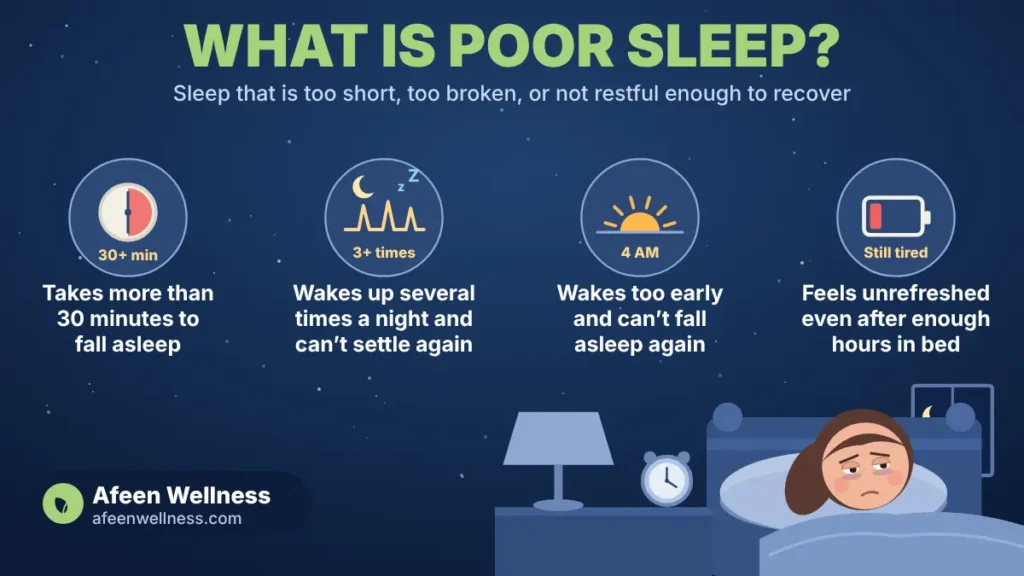
The poor sleep meaning is simple: sleep that is too short, too broken, or not restful enough for your body and mind to recover. You can spend 8 hours in bed and still have poor sleep quality if you wake often or never reach deep, restorative sleep.
Poor sleep quality usually shows up as:
- Taking more than 30 minutes to fall asleep
- Waking up several times a night and struggling to get back to sleep
- Waking too early and being unable to fall asleep again
- Feeling unrefreshed in the morning, even after enough hours in bed
What Is Lack of Sleep Called?
The medical term for not getting enough sleep is sleep deprivation. You may also hear it called insufficient sleep or sleep debt. Sleep deprivation is not the same as insomnia. Insomnia is a sleep disorder where you have trouble falling or staying asleep even when you have the chance to sleep. Sleep deprivation can happen simply because you do not give yourself enough time in bed.
Sleep Deprivation Meaning
Sleep deprivation meaning: a state in which you regularly get less sleep than your body needs. It can be acute (a night or two of very little sleep) or chronic (weeks or months of short sleep). Chronic sleep deprivation is the type most strongly linked to health problems.
How Much Sleep Do You Need?
Most healthy adults need 7 to 9 hours of good-quality sleep each night. Teenagers need more, and older adults need about the same amount, although their sleep is often lighter. Quality matters as well as quantity. Deep sleep and REM sleep help your body repair muscle, release growth hormone, balance appetite hormones, and process emotions.
What Causes Poor Sleep Quality? (Poor Sleep Causes)
If you are wondering what causes poor sleep quality or what causes lack of sleep, these are the most common reasons:
- Stress and anxiety: A busy mind and raised stress hormones make it hard to switch off.
- Irregular sleep schedule: Shift work, jet lag, and very different bedtimes on weekdays and weekends confuse your body clock.
- Poor sleep hygiene: Habits and surroundings that work against sleep (see the next section).
- Caffeine, nicotine, and alcohol: Caffeine and nicotine are stimulants. Alcohol may make you drowsy but breaks up sleep later in the night.
- Screens and bright light at night: Blue light from phones and laptops can delay the release of melatonin, the hormone that signals bedtime.
- Heavy or late meals: Eating close to bedtime can cause discomfort and reflux.
- Health conditions: Sleep apnoea, restless legs syndrome, chronic pain, acid reflux, asthma, thyroid problems, depression, and anxiety can all disturb sleep.
- Medicines: Some medicines, such as certain antidepressants, steroids, and decongestants, can affect sleep.
- Environment: Noise, light, heat, or an uncomfortable mattress.
- Lifestyle: Lack of daylight and exercise, long working hours, and caring for children or relatives at night.
Poor Sleep Hygiene: What It Is and How to Fix It
Poor sleep hygiene means having daily habits and a bedroom setup that make good sleep harder. Here are the most common mistakes and simple fixes:
| Poor sleep hygiene habit | Better habit |
| Going to bed and waking at different times every day | Keep the same sleep and wake time, even at weekends |
| Using a phone or laptop in bed | Stop screens 1 to 2 hours before bed |
| Caffeine in the afternoon or evening | Avoid caffeine for at least 6 to 8 hours before bedtime |
| Large meals or alcohol close to bedtime | Finish eating 2 to 3 hours before bed and limit alcohol |
| Bright, noisy, or hot bedroom | Keep it dark, quiet, and cool |
| Long or late naps | Keep naps under 30 minutes and before mid-afternoon |
| Working or worrying in bed | Use your bed only for sleep and relaxation |
Poor Sleep Symptoms
Common poor sleep symptoms include:
- Daytime tiredness and sleepiness
- Difficulty concentrating and poor memory
- Irritability, low mood, and anxiety
- Strong hunger and cravings, especially for sugary or fatty foods
- Slower reaction times and clumsiness
- Headaches
- Slow recovery after exercise
- Gaining weight, or struggling to lose it, despite eating well
Side Effects of Lack of Sleep
Occasional bad nights are normal, but long-term lack of sleep can affect nearly every system in the body. The main side effects of lack of sleep include:
- Weight gain and obesity risk
- Higher risk of type 2 diabetes through reduced insulin sensitivity
- Heart and blood pressure problems
- A weaker immune system, so you catch more colds and infections
- Mood problems, including anxiety and depression
- Poor focus, memory, and decision-making
- Accidents, such as drowsy driving and errors at work
- Slower muscle recovery and a higher risk of sports injuries
Poor Sleep and Weight Gain: How They Are Connected
Research consistently links short or poor sleep with weight gain. Sleep affects your appetite, food choices, hormones, metabolism, and energy. Here is how.
1. Hunger Hormones Get Out of Balance
Sleep helps control two appetite hormones: ghrelin, which signals hunger, and leptin, which signals fullness. When you are sleep deprived, ghrelin tends to rise and leptin tends to fall. You feel hungrier and less satisfied after meals, which makes it easy to eat more than you need.
2. You Crave High-Calorie Foods
Lack of sleep makes the brain’s reward centres more responsive to sugary and fatty foods while weakening impulse control. Tiredness also makes your body look for quick energy from sweets and refined carbohydrates, which can cause blood sugar spikes and crashes and more cravings. Staying awake for longer in the evening also gives you more opportunities to snack.
3. Metabolism Can Slow Down
Poor sleep reduces insulin sensitivity, so your body handles sugar less efficiently and may store more of it as fat. Over time, this can make weight loss harder and increase the risk of metabolic problems.
4. Cortisol Rises
Cortisol is your main stress hormone. Chronic lack of sleep can keep it high, which is linked to increased appetite, fat storage (especially around the abdomen), and muscle breakdown. Less muscle means fewer calories burned at rest, which can fuel a vicious cycle. If stress is also a problem for you, read our guide on how stress makes you gain weight.
5. You Have Less Energy to Move
When you are exhausted, you are less likely to exercise, take the stairs, or walk, and your workouts feel harder. This lowers the calories you burn each day and makes fatigue worse, creating a cycle of low energy and inactivity.
6. Muscle Recovery Is Impaired
Growth hormone, which helps repair muscle and break down fat, is released mainly during deep sleep. Poor sleep reduces recovery, strength, and endurance, and raises the risk of injury and loss of motivation to train.
7. Mood Changes Lead to Emotional Eating
Poor sleep makes you more irritable and stressed. When you are tired and emotional, you are more likely to snack without thinking and choose comfort foods instead of nourishing ones.
8. Insulin Resistance and Diabetes Risk
Reduced insulin sensitivity makes it harder for your body to manage blood sugar. Over time, chronic sleep loss is a recognised risk factor for type 2 diabetes and other metabolic problems.
9. Weaker Self-Control and Decision-Making
Sleep loss weakens the prefrontal cortex, the part of the brain that handles planning and self-control, while the amygdala, which drives emotional reactions and cravings, becomes more active. That is why willpower feels so low when you are tired.
10. Low-Grade Inflammation
Poor sleep is associated with higher levels of inflammatory markers such as C-reactive protein (CRP). Chronic inflammation is linked with insulin resistance, increased appetite, and a higher risk of obesity, type 2 diabetes, and heart disease.
Note: These studies show an association between poor sleep and weight gain, not that sleep loss is the only cause. Diet, activity, stress, genetics, and medical conditions all play a part.
How to Fix Poor Sleep
Wondering how to fix poor sleep? These habits work for most people and are the first things doctors recommend.
Keep a Regular Sleep Schedule
Go to bed and wake up at the same time every day, including weekends. This steadies your body clock (circadian rhythm) so you cycle properly through deep sleep and REM sleep.
Get Morning Daylight and Exercise
Spending time outside in the morning and being active during the day help you feel sleepy at night. Avoid intense exercise right before bed if it keeps you awake.
Limit Screens Before Bed
Phones, tablets, and laptops give off blue light that can delay melatonin. Try to switch them off 1 to 2 hours before bed and swap them for reading, stretching, or a warm shower.
Watch Caffeine, Alcohol, and Late Meals
Avoid caffeine in the afternoon and evening, limit alcohol, and leave 2 to 3 hours between your last heavy meal and bedtime. This helps digestion, steadies blood sugar, and reduces the urge to snack late at night.
Manage Stress
Deep breathing, meditation, gentle yoga, or writing down your worries earlier in the evening can calm your mind. You can start with our easy meditation techniques for beginners.
Make Your Bedroom Sleep-Friendly
Aim for a dark, quiet, and cool room (around 18 to 20 °C is comfortable for most people). Use blackout curtains or an eye mask, earplugs if needed, and a comfortable mattress and pillows.
How to Sleep Faster
If you want to know how to sleep faster, try these evidence-based tips:
- Wind down for 30 to 60 minutes. Dim the lights and do something calming.
- Take a warm shower or bath about 1 to 2 hours before bed. The drop in body temperature afterwards promotes sleepiness.
- Try slow breathing. For example, breathe in through your nose for 4 seconds, hold for 7, and breathe out slowly for 8. Repeat for a few minutes.
- Do progressive muscle relaxation. Tense and release each muscle group from your toes to your face.
- Do not watch the clock. Clock-watching increases stress and makes sleep harder.
- Get up if you cannot sleep. If you are still awake after about 20 minutes, leave the bed, do something quiet in dim light, and return when sleepy.
How to Recover From Lack of Sleep Fast
If you are asking how to recover from lack of sleep fast, there is no instant fix, but you can bounce back faster with these steps:
- Go to bed earlier for a few nights, and keep your wake-up time roughly the same.
- Take a short nap of 20 to 30 minutes before mid-afternoon if you need it.
- Get daylight early in the day to reset your body clock.
- Stay hydrated and eat balanced meals, and avoid relying on caffeine and sugar.
- Move your body gently. A walk can boost alertness.
- Avoid long lie-ins. Sleeping in for hours can disrupt your rhythm, so limit weekend catch-up to an hour or two.
- Do not drive when drowsy.
A single bad night can usually be recovered in a day or two. Recovering from weeks or months of sleep debt can take longer.
Sleep Deprivation Treatment: How to Fix Sleep Deprivation
For how to fix sleep deprivation, the best sleep deprivation treatment depends on the cause:
- If you are not giving yourself enough time to sleep: Make sleep a priority. Set a fixed bedtime and protect 7 to 9 hours.
- If stress or anxiety keeps you awake: Relaxation techniques, counselling, or cognitive behavioural therapy can help.
- If you have long-term insomnia: Cognitive behavioural therapy for insomnia (CBT-I) is widely recommended as a first-line treatment.
- If you have a medical cause: Treating sleep apnoea, restless legs, pain, reflux, or other conditions often improves sleep dramatically.
- If medicines are involved: Ask your doctor whether any of your medicines affect sleep. Do not stop a prescribed medicine without advice.
- Sleep aids and supplements: Speak to a doctor or pharmacist before using sleeping tablets or supplements such as melatonin.
When to See a Doctor
Book an appointment if:
- Poor sleep lasts more than 3 to 4 weeks
- You snore loudly, gasp, or stop breathing during sleep, which can signal sleep apnoea
- You feel an irresistible urge to move your legs at night
- You are very sleepy during the day or fall asleep while driving or working
- Poor sleep comes with low mood, anxiety, or unexplained weight changes
Frequently Asked Questions (FAQs)
What causes poor sleep quality?
Common causes include stress, an irregular sleep schedule, poor sleep hygiene, caffeine, alcohol, screen use at night, an uncomfortable bedroom, medicines, and health conditions such as sleep apnoea or chronic pain.
What is poor sleep hygiene?
Poor sleep hygiene means habits and environments that interfere with good sleep, such as irregular bedtimes, screens in bed, late caffeine, heavy late meals, and a noisy or bright bedroom.
What are the symptoms of poor sleep?
Symptoms include daytime tiredness, trouble concentrating, irritability, headaches, strong cravings, slow exercise recovery, and difficulty losing weight.
What are the side effects of lack of sleep?
Long-term lack of sleep is linked to weight gain, type 2 diabetes, heart problems, a weaker immune system, mood disorders, memory problems, and a higher risk of accidents.
What is lack of sleep called?
Lack of sleep is called sleep deprivation, also known as insufficient sleep or sleep debt. It is different from insomnia, which is difficulty falling or staying asleep.
What is the meaning of sleep deprivation?
Sleep deprivation means regularly getting less sleep than your body needs to function well.
How do you fix sleep deprivation?
Prioritise 7 to 9 hours of sleep, keep a consistent schedule, reduce caffeine and screens in the evening, manage stress, and treat any underlying sleep disorder. See a doctor if it continues.
How can I recover from lack of sleep fast?
Go to bed earlier for a few nights, keep a regular wake-up time, take a short nap before mid-afternoon, get morning daylight, and avoid excess caffeine. Recovery from long-term sleep debt takes more time.
How can I fall asleep faster?
Wind down before bed, take a warm shower, try slow breathing or muscle relaxation, keep the room dark and cool, and avoid screens. If you are still awake after about 20 minutes, get up for a while and return when you feel sleepy.
Can poor sleep cause weight gain?
Yes, poor sleep is linked to weight gain. It disrupts hunger hormones, increases cravings and cortisol, lowers energy for exercise, and reduces insulin sensitivity, all of which can raise calorie intake and fat storage.
How many hours of sleep do adults need?
Most adults need 7 to 9 hours of sleep per night.
The Bottom Line
Poor sleep is a powerful but often overlooked factor in weight gain and overall health. It makes you hungrier, increases cravings, slows recovery, raises stress hormones, and weakens self-control, while lowering your energy to be active. The encouraging news is that sleep can be improved. Keep a regular schedule, limit caffeine, alcohol, late meals, and screens, manage stress, and create a calm, dark, cool bedroom. Sleep is not a luxury. It is one of the foundations of health, fitness, and a healthy weight.
Trusted Sources and Further Reading
- National Heart, Lung, and Blood Institute (NHLBI): Sleep deprivation and deficiency
- Centers for Disease Control and Prevention (CDC): Sleep
- NHS: Insomnia
- Mayo Clinic: Insomnia
- Sleep Foundation
- Watson NF, et al. Recommended Amount of Sleep for a Healthy Adult: A Joint Consensus Statement of the American Academy of Sleep Medicine and Sleep Research Society. Sleep, 2015.
Medical Disclaimer
The information on this website is for general educational purposes only and is not a substitute for professional medical advice, diagnosis, or treatment. Always seek the advice of your doctor or another qualified healthcare provider with any questions about a medical condition, a sleep problem, or before taking any medication or supplement. Never ignore professional advice or delay seeking it because of something you have read here. If you think you have a medical emergency, call your local emergency number immediately.